Use-case guide · 2026 edition

The best form builders for e-commerce

Setting up a full Shopify store to sell twelve products is like renting a warehouse for a market stall. An order form with product fields, quantity math, and Stripe checkout can be live this afternoon. We ranked five form builders by how well they actually sell.

Last updated · 5 tools tested · No sponsored placements

Our verdict for e-commerce

forms.app is the best order-form builder for most sellers: its product listing field is unmatched, payments start at $19/month, and it generates PDF receipts from responses. If your pricing involves serious math — taxes, discounts, tiered quantities — Cognito Forms has the strongest calculation engine. Selling on WordPress? WPForms keeps orders in your dashboard.

Best form builders for e-commerce — at a glance
Rank Tool E-commerce strength Payment gateways Paid from
1forms.appBest product listing field + PDF receiptsStripe & PayPal$19/mo
2Cognito FormsTaxes, discounts & quantity pricingYes$19/mo
3PaperformOrder forms that look like product pagesYes~$24/mo
4JotformWidest gateway choice & templates30+$39/mo
5WPFormsOrder forms inside WordPressStripe & PayPal$49.50/yr
#1

forms.app

Best overall for order forms
  • ★ 4.5 G2
  • ★ 4.3 Trustpilot
  • Free plan: Unlimited responses
  • Paid from $29/mo ($19 annual)

Most form builders fake an order form with checkboxes and a price note. forms.app has a genuine product listing field — items with photos, prices, and quantity selectors that total up as the customer shops — which is the closest a form gets to feeling like a real storefront. Connect Stripe or PayPal on the free plan and you're charging cards the same day.

Two follow-through features seal the win. PDF generation turns each submission into a receipt or quote you can send automatically — the unglamorous half of order processing that most builders ignore. And unlimited responses on every plan mean a product drop that takes off won't run into a quota mid-launch.

The gaps to know: no offline submission mode (relevant for craft fairs with bad Wi-Fi) and no mobile SDK if you ever want forms inside a native app. For link-, site-, and QR-based selling, neither matters.

Pros

  • Unmatched product listing field
  • Stripe & PayPal from $19/mo
  • PDF receipts & quotes from responses
  • Huge response headroom for launches

Cons

  • No offline submissions
  • No mobile SDK for native apps

Pricing: Free · Basic $19/mo · Pro $29/mo · Premium $59/mo, billed annually.

Try forms.app free →
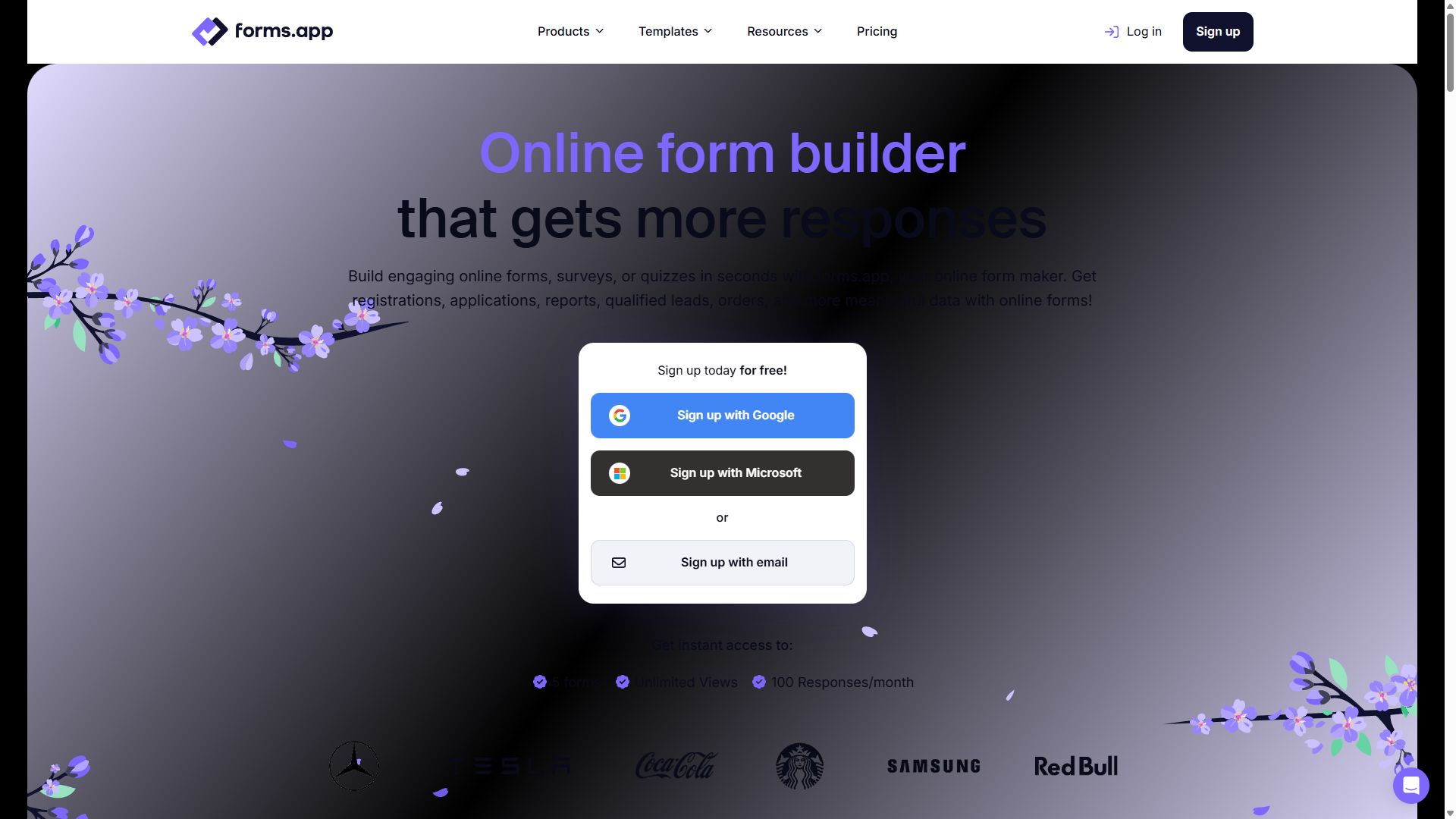
forms.app homepage showing its order form and payment features
forms.app — captured during our June 2026 testing
#2

Cognito Forms

Best pricing & calculation engine
  • ★ 4.6 G2
  • ★ 4.0 Trustpilot
  • Free plan: 100 entries/mo
  • Paid from $19/mo

The hardest part of an order form isn't collecting the order — it's getting the total right. Cognito Forms exists for exactly that. Its calculation engine, the best in this price range, handles sales tax, percentage discounts, quantity-break pricing ("10+ units, 15% off"), and conditional totals that change with the customer's choices, all without a line of code.

Repeating sections are the other e-commerce weapon: customers add line items to a single order the way they'd add rows to an invoice — perfect for wholesale orders, custom print runs, or catering menus. The honest trade-off is that the forms look plain; you're choosing arithmetic over aesthetics. For B2B and custom-quote selling, that's usually the right trade.

Pros

  • Taxes, discounts & quantity pricing built in
  • Repeating sections for line items
  • Accurate totals before checkout

Cons

  • Plain visual design
  • Many integrations route through Zapier
  • Not built for marketing funnels

Pricing: Free · Individual $19/mo · Professional $39/mo · Enterprise $129/mo.

Visit Cognito Forms →
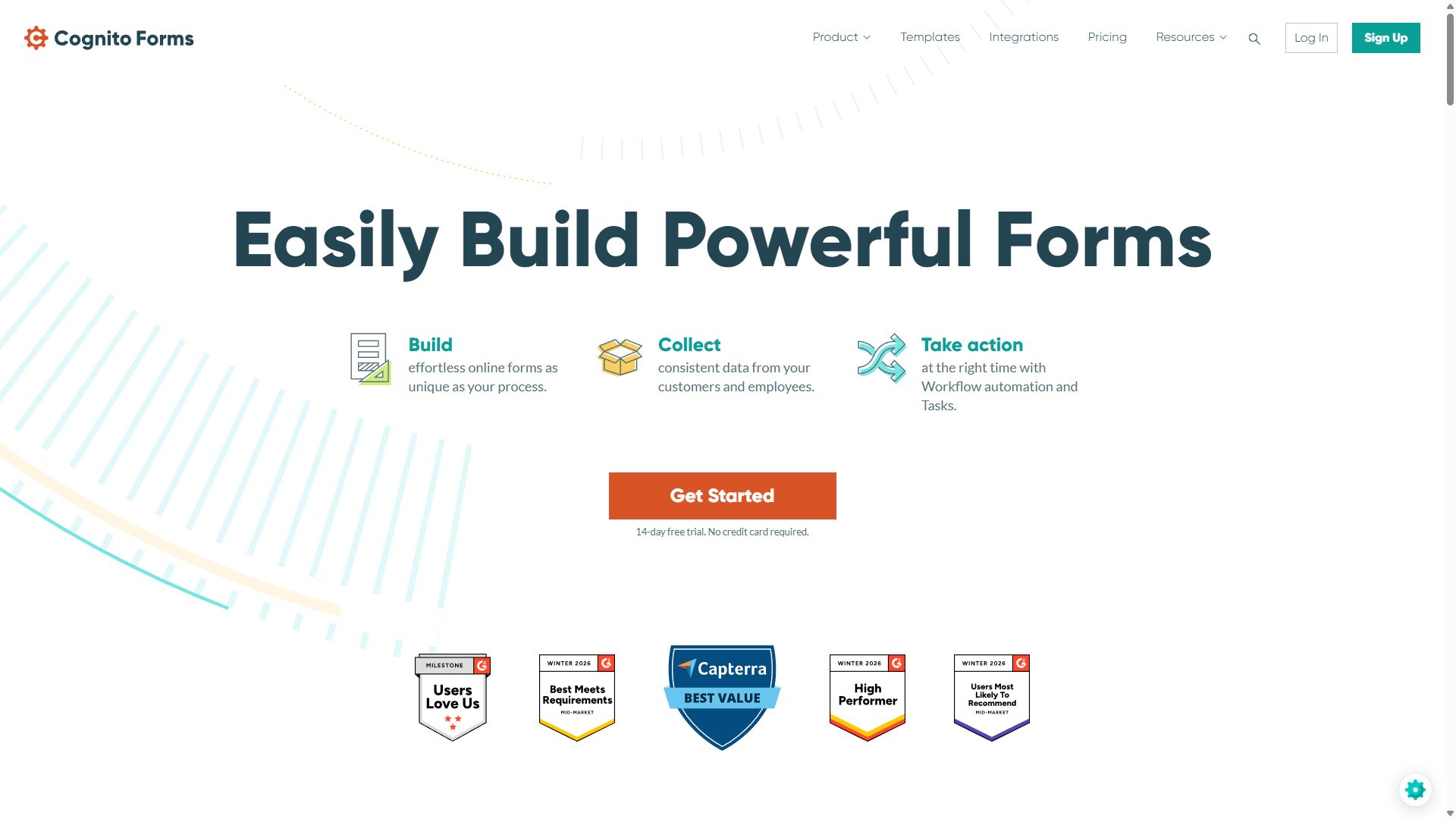
Cognito Forms homepage featuring its calculation-focused form builder
Cognito Forms — captured during our June 2026 testing
#3

Paperform

Order forms that sell themselves
  • ★ 4.8 G2
  • ★ 4.8 Trustpilot
  • Free plan: 30 submissions/mo
  • Paid from ~$24/mo (annual)

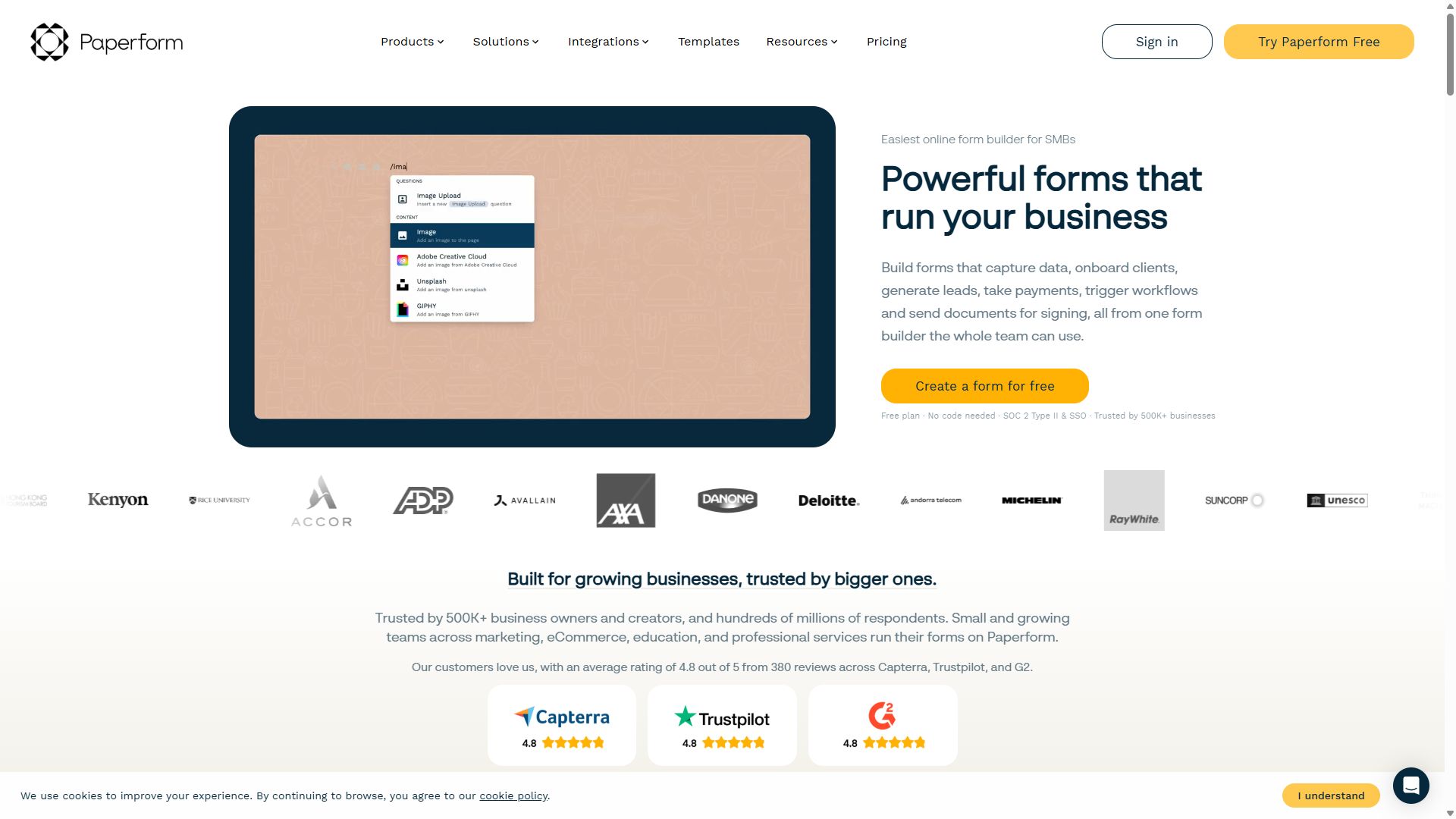
An order form is also a sales page, and Paperform is the only builder here that treats it that way. Product photography, description copy, video, and the order fields share one canvas, so the page that takes the order is the same page that convinces the customer — no separate landing page needed. For bakers, makers, photographers, and anyone selling bookings alongside goods, it's built for exactly this.

Sellers and customers both seem to agree: 4.8 stars on G2 and on Trustpilot, the best scores in this ranking. It takes third rather than first because operations lag presentation — calculations are lighter than Cognito's, the free plan's 30 submissions won't survive a real product drop, and the canvas editor needs some learning before it feels fast.

Pros

  • Order forms double as product pages
  • Strong for product sales & bookings
  • 4.8 stars on G2 and Trustpilot

Cons

  • Only 30 free submissions/mo
  • Editor learning curve
  • Not ideal for high-volume selling

Pricing: Free · Essentials ~$24/mo · Pro ~$49/mo · Business ~$99/mo, billed annually.

Visit Paperform →
Paperform homepage showing landing-page-style order forms
Paperform — captured during our June 2026 testing
#4

Jotform

Most payment gateways
  • ★ 4.7 G2
  • ★ 4.4 Trustpilot
  • Free plan: 100 submissions/mo
  • Paid from $39/mo

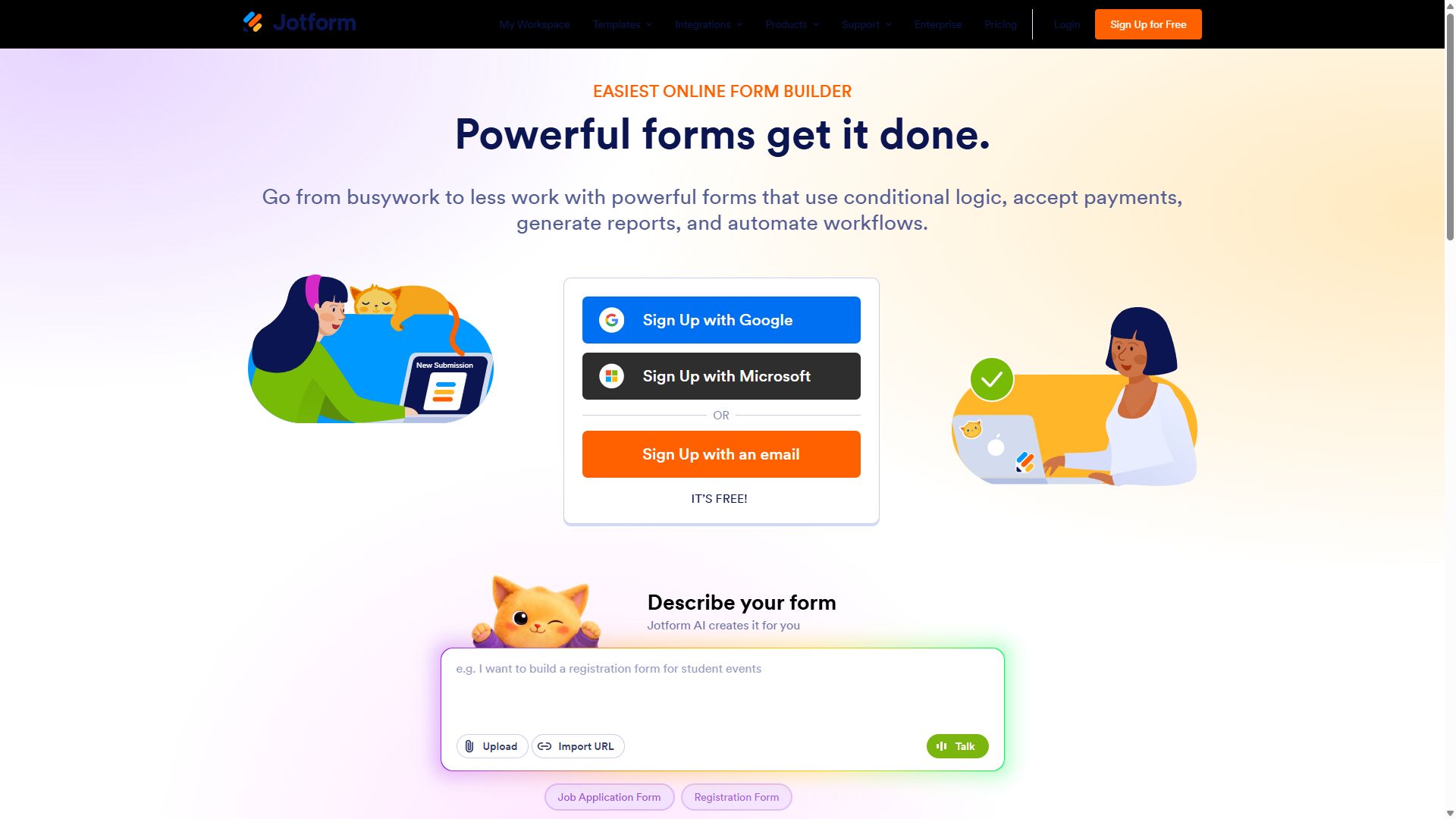
If your customers pay through anything more exotic than Stripe or PayPal, Jotform is the answer: more than 30 payment gateways, the widest selection of any tool here. Add 20,000+ templates — including ready-made order forms for nearly any product category — and 200+ integrations to push orders into your CRM or fulfillment sheet, and you get a platform that handles almost any selling scenario.

Fourth place comes down to cost and weight. Paid plans start at $39/month, double the entry price of forms.app or Cognito Forms, and the editor's breadth means more clicking past features you'll never use. Worth it when you specifically need a niche gateway or an unusual template; otherwise the tools above deliver the core job for less.

Pros

  • 30+ payment gateways
  • Order form templates for everything
  • 200+ integrations for order routing

Cons

  • Starts at $39/mo
  • Editor feels heavy for simple orders
  • Can slow down on complex forms

Pricing: Free · Bronze $39/mo · Silver $49/mo · Gold $129/mo.

Visit Jotform →
Jotform homepage with its drag-and-drop form builder
Jotform — captured during our June 2026 testing
#5

WPForms

Order forms inside WordPress
  • ★ 4.7 Trustpilot
  • Lite version free
  • Paid from $49.50/yr

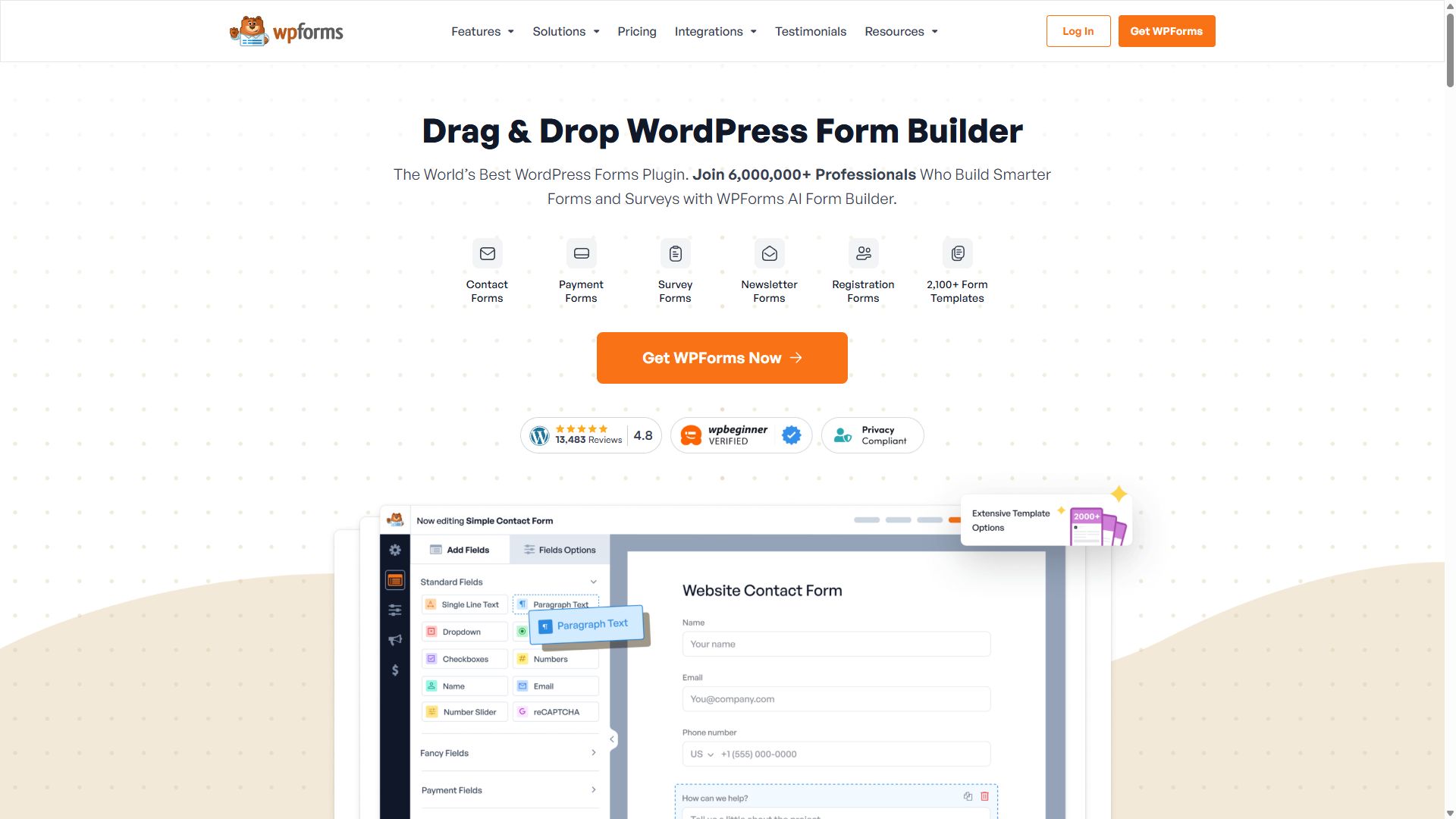
If your shop window is a WordPress site, WPForms lets you sell without leaving it. Order forms with Stripe and PayPal drop into any page or post, the template library includes ready-made payment and order layouts, and every order is stored in your own WordPress database rather than a third-party dashboard. At $49.50 a year for the Basic license, it's also the cheapest paid entry point in this ranking.

Its position reflects its boundaries: it's worthless off WordPress, licenses are annual-only, advanced features push toward the $299.50/year Elite tier, and high-volume selling isn't what it's built for. As a bolt-on order channel for an existing WordPress site, though, it's the natural pick.

Pros

  • Stripe & PayPal inside WordPress
  • Order data stays in your database
  • Cheapest paid entry ($49.50/yr)

Cons

  • WordPress-only
  • Annual billing only
  • Not built for high volume

Pricing: Basic $49.50/yr · Plus $99.50/yr · Pro $199.50/yr · Elite $299.50/yr.

Visit WPForms →
WPForms homepage for the WordPress form plugin
WPForms — captured during our June 2026 testing

How to choose an order form builder

Before comparing tools, decide what your selling actually requires. Three questions get you there:

1. Form or full store? Count your products

Up to roughly a dozen products with simple variants, a form wins on speed and cost — live in an hour, from $19/month, no platform to maintain. The crossover comes when customers need to browse: search, filters, carts, accounts, inventory syncing. If shoppers will compare products rather than order from a known menu, you've outgrown a form and a store platform earns its overhead.

2. Map your pricing math before you pick

Write down a worst-case order: three items, a quantity discount, sales tax, rush fee. Flat per-item prices? Any tool here works, and forms.app's product field is the smoothest. Tiered quantities, conditional discounts, or tax rules? That's Cognito Forms territory — retrofitting complex math onto a builder without a real calculation engine is how order forms end up undercharging.

3. Plan what happens after the order

Taking the payment is half the job; the other half is what the customer and you each receive. Look for automatic receipts (forms.app generates PDFs from each response), notification emails to your fulfillment inbox, and an export or integration that gets orders into whatever you track them in. A form that collects money but leaves you copy-pasting orders into a spreadsheet costs you its savings back in admin time.

Bottom line

Start with forms.app's free plan — Stripe and PayPal are already included — and switch to Cognito Forms only if your pricing math defeats it.

E-commerce form builder FAQ

Can you sell products with a form builder?

Yes. Modern form builders support product fields with images and prices, quantity selectors, and Stripe or PayPal checkout, so a single order form can take and charge for orders. forms.app has the strongest product listing field for this, with payments included on the free plan, and it can generate PDF receipts from each order.

When is an order form enough instead of a Shopify store?

An order form is enough when you sell a small catalog — roughly a dozen products or fewer — and don't need carts, customer accounts, or inventory syncing. Pre-orders, local pickup, made-to-order goods, and service add-ons all fit a form. Once you need search, filtering, multi-page catalogs, or shipping integrations, a dedicated store platform becomes worth its overhead.

Which form builder handles tax and discount calculations best?

Cognito Forms has the best calculation engine in its price range. It handles taxes, discounts, quantity-based pricing, and conditional totals, and its repeating sections let customers add multiple line items to one order. Pricing starts at $19/month for the Individual plan, with a free plan covering 100 entries a month.

Do form builders charge fees on payments?

Payment processors like Stripe and PayPal always charge their own transaction fees, regardless of which form builder you use. Some builders add platform fees on certain plans on top of that — for example, WPForms' Lite version adds a 3% fee on Stripe payments, which its paid licenses remove. Check both the processor's rate and your plan's terms before launching an order form.